

Taiwan Contemporary Culture Lab (C-LAB) and the National Center for Art Research, Japan (NCAR) signed a Memorandum of Understanding in 2024. In the same year, NCAR organized a Study Tour, bringing eight Japanese curators and museum professionals to Taiwan for a five-day visit. In 2025, NCAR and C-LAB respectively signed additional cooperation agreements with the National Culture and Arts Foundation (NCAF), and the three parties jointly developed the 2025 Curatorial Academy International Exchange Program, through which 5 emerging Taiwanese curators and arts administration professionals were selected to visit Japan.
Over the course of a ten-day itinerary, the group visited a total of 14 institutions and engaged in in-depth exchanges with more than 40 local curators. In parallel, NCAR organized a public sharing session under the theme Exploring Art Scenes in Taiwan! Talks by Emerging Curators, inviting the 5 visiting curators, along with partners from C-LAB and NCAF, to participate in presentations and discussions.
Over the past decade, Taiwan’s policy of establishing at least one public art museum per municipality has positioned “local art museums” as key cultural infrastructure. Questions surrounding how museums respond to local contexts, develop collection strategies, navigate the challenges of corporatization, transform former cultural centers, and retain professional talent can all be understood as negotiations among systems, spaces, and professional divisions of labor. This still-emerging form of public culture also provides an experimental ground for actively reimagining “publicness.”
Participants in the program included Nancy Nien-Cheng WU, Assistant Curator at the Kaohsiung Museum of Fine Arts—an institution with a longer history and relatively mature systems and collections; HUANG Yu-Jie, Assistant Curator at the newly opened New Taipei City Art Museum; and LAI Chih-Ting, Head of the Research and Collection Department at the Taoyuan Museum of Fine Arts, which has yet to open its main building and is still constructing its institutional framework. They were joined by CHEN Pin-Yi, Producer at the independent organization Dimension Plus, and independent curator LIN Yu-Hsuan. Together with colleagues from C-LAB and NCAF, the 5 participants traveled to Japan carrying their respective institutional backgrounds and professional perspectives. Throughout this journey, outward-facing exchanges were accompanied by inward reflection, as participants shared curatorial methodologies, collection strategies, institutional positioning, approaches to public programs, and observations on current issues.
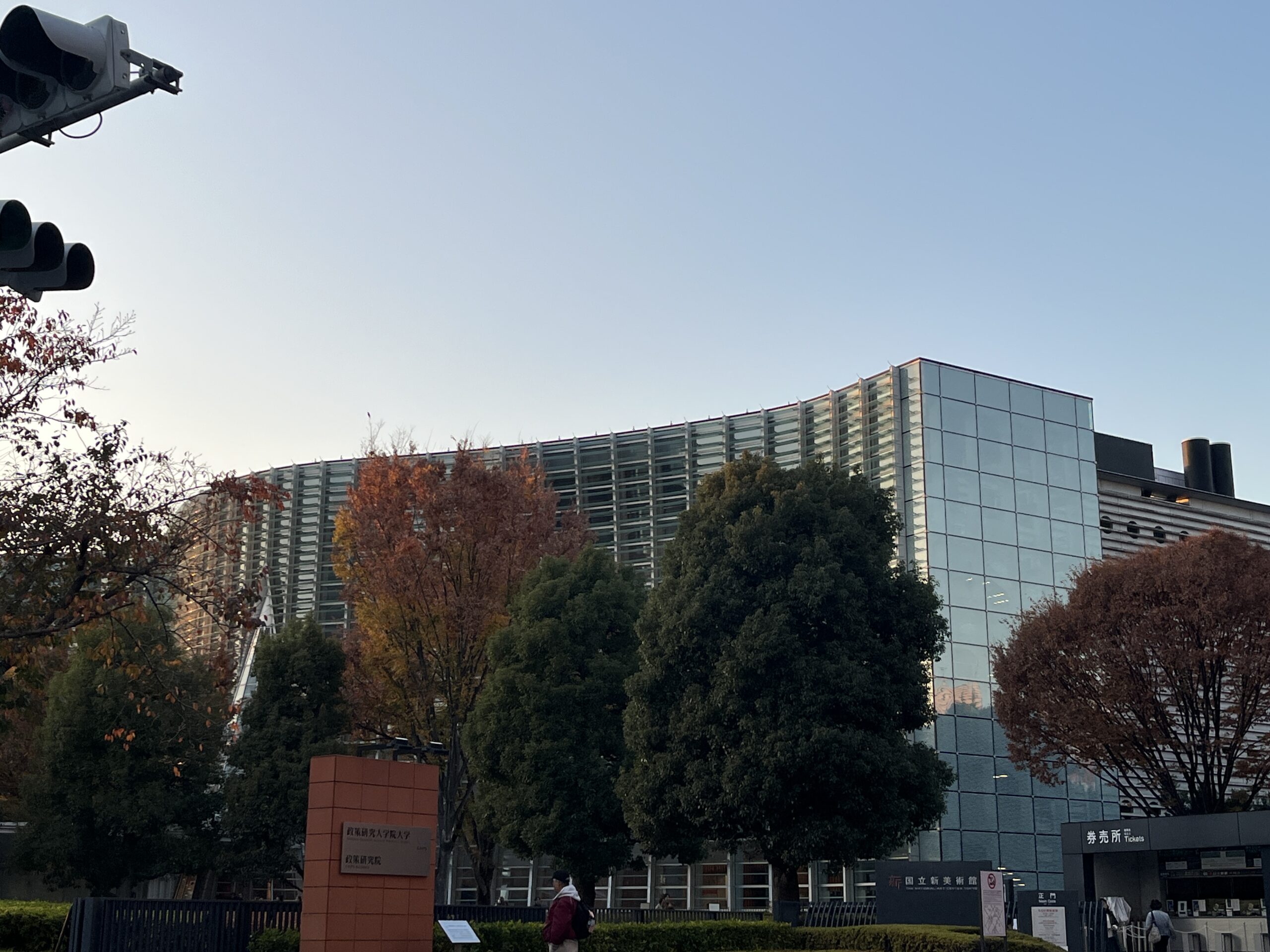 The National Art Center, Tokyo. Photo courtesy of C-LAB.
Immediately upon arrival in Japan, the group began an intensive schedule of institutional visits in Tokyo. The itinerary included five national institutions, five local institutions, three private institutions, one regional art festival, and several galleries. These concentrated visits quickly foregrounded the central role of collections in shaping curatorial and exhibition models across different museums. A museum’s collection strategy often sets the overarching direction of the institution, as seen in the National Museum of Modern Art, Tokyo; Tokyo Photographic Art Museum; Museum of Contemporary Art Tokyo; the National Museum of Art, Osaka; and the Fukuoka Asian Art Museum (listed in order of visitation).
Discussions repeatedly returned to questions of collections: how collections are mobilized in curatorial practice, the curatorial directions they inform, and the ways these strategies have shifted over time. In many exhibitions, representative works drawn from collections reflected the strong economic foundations of Japan’s earlier period, both in terms of quality and quantity.
Beyond differing collection strategies, museums also varied in how they utilized and developed their collections. The Tokyo Photographic Art Museum, for example, not only presents collection exhibitions but also considers the potential acquisition of works shown in thematic exhibitions, incorporating such evaluations into its curatorial mechanisms. By contrast, the National Art Center, Tokyo, which does not maintain its own collection, focuses on borrowing works from external sources. As time progresses, even institutions with well-established collection-based models are reassessing their approaches. At the National Museum of Modern Art, Tokyo—where collection exhibitions form the backbone of the museum—recent discussions have centered on redefining what constitutes the “modern and contemporary” within the temporal framework, and how this redefinition might be reflected in curatorial planning.
Curators at multiple institutions also noted a declining audience interest in collection-based exhibitions. This shift has affected ticket pricing, curatorial approaches to collection displays, and the tone of thematic exhibitions, becoming one of the ongoing challenges museums must confront.
At the Cross-disciplinary Field Notes:2025 Curator Academy Taiwan Sharing Session, LAI Chih-Ting presented a talk titled Institutional Methodologies within the Context of Collections. She analyzed how Japan’s early investment in museum infrastructure, combined with strong national economic capacity, enabled the development of clear collection strategies and systematic frameworks. She also discussed how recent fiscal constraints have influenced decisions on collection use and collection-based curation. By comparing the collections of the Fukuoka Asian Art Museum and the Taoyuan Museum of Fine Arts—each holding a different format of Chen Chieh-Jen’s Factory, respectively as a video work and a digital print—she proposed future possibilities for dialogue within transnational and inter-institutional collection histories. Drawing from Japanese experience, she further considered how Taiwan’s museums might rethink collection building, the potential of digital archiving as cultural infrastructure, and how local museums in Taiwan could imagine the next decade through more dynamic, activated collection models.
Nancy Nien-Cheng WU, who has long focused on the concept of the “Global South,” discussed the trajectory from local to Asian to international perspectives. Using the Fukuoka Asian Art Museum’s exhibition Breaking the Conventional: New Self-Portraits as an example, she analyzed representative Asian artists and key works from the museum’s collection from the 1980s and 1990s, examining how issues of colonialism and postcoloniality are articulated through curatorial engagement with the collection. She also examined how the museum sustains its connections with Asia through integrated strategies encompassing collections, curatorial practices, and residency programs. This approach—through which Japan repositions itself within an Asian context—prompted her to reflect on whether a similar model might inform the role and positioning of the Kaohsiung Museum of Fine Arts as a regional museum outside the capital region.
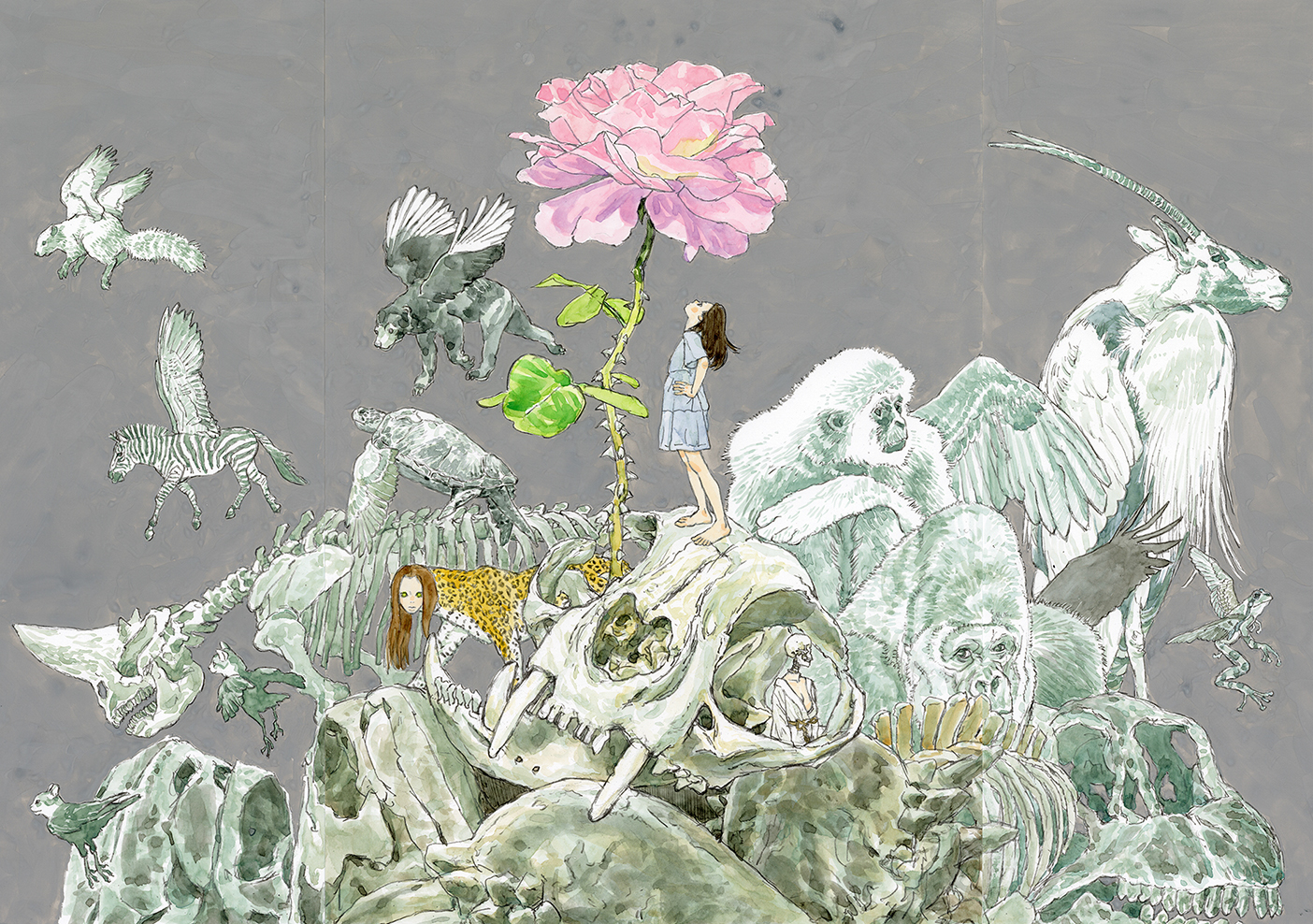 Copyright © 2024 Daisuke Igarashi. All Rights Reserved.
After five days of institutional visits in Tokyo, the itinerary moved to central Japan to visit the Aichi Triennale 2025, themed A Time Between Ashes and Roses. Within the context of Japanese regional art festivals, art is often regarded as a means of connecting local memory with visions of regeneration, and the Aichi Triennale stands as a representative example. This edition spanned Seto City and Nagoya City, utilizing museums, shopping streets, and urban spaces, and reorganizing spatial relationships in response to curatorial themes.
This non-fixed, theme-responsive exhibition strategy intertwined local industrial transformation, traces of urban use, and artistic presentation within a shared spatial narrative. Works were often dispersed across everyday settings, requiring visitors to walk and search to encounter them. Such experiences—situated between daily life and exhibition—constitute a form of perceptual tension that resists full institutionalization yet remains central to the appeal of regional art festivals.
Another notable aspect of this edition was the appointment of Hoor Al Qasimi, a member of the Sharjah royal family, as the first non-Japanese Artistic Director of the Aichi Triennale. In her opening remarks and multiple media interviews, she openly expressed political support for Palestine, lending the triennale a comparatively explicit political stance within Japan’s art festival landscape. Curatorially, the exhibition began with Seto’s ceramic industry, traditional crafts, and local memory, while simultaneously introducing global issues—such as war, colonialism, national identity, and environmental concerns—into local exhibition sites, creating tension between regional narratives and international politics.
During the visit, the group also toured the Art Lab Aichi, located on the second floor of the Aichi-Nagoya War Memorial Museum. As one of the main operational bases of the triennale, it does not function as a primary exhibition venue, but rather as a site for daily arts outreach, education, and planning during the preparation period. It can be seen as a space that sustains local cultural and community energy. Inside, neatly arranged binders compiled detailed information on participating artists’ CVs, images, official websites, and social media links demonstrating the curatorial team’s emphasis on research, archiving, and information accessibility.
In addition to the Art Lab Aichi, the eighth floor of the Aichi Arts Center—one of the main venues—houses a dedicated space known as “Learning Center HETACHI.” Together, these two sites form another crucial backbone of the exhibition structure, supporting education and public engagement while extending the exhibition’s imagination both physically and conceptually.
The learning center functions as an open-access reading space that houses collections of selected participating artists’ portfolios and related publications, while also hosting lectures and workshops. In addition, it collaborates with schools on teacher training, curriculum development, and accessibility support initiatives. Notably, this space is not intended solely for exhibition visitors. Through extended periods of residence and observation, HUANG observed staff members collaborating with volunteers to develop a participatory game titled Art Werewolf, repeatedly testing its mechanics with the aim of eventually offering it to curatorial teams as an extension of their educational and public outreach initiatives. Rather than a purely education-oriented facility, Learning Center HETACHI functions more as an interactive public space, fostering encounters and new understandings of art through play, discussion, and co-creation. Its name, “HETACHI,” derives from a term in architecture and urban planning that refers to irregular residual spaces left behind by changes to roads, urban layouts, or buildings; this naming aptly echoes the practice of transforming overlooked margins into an open, non-typical learning environment.
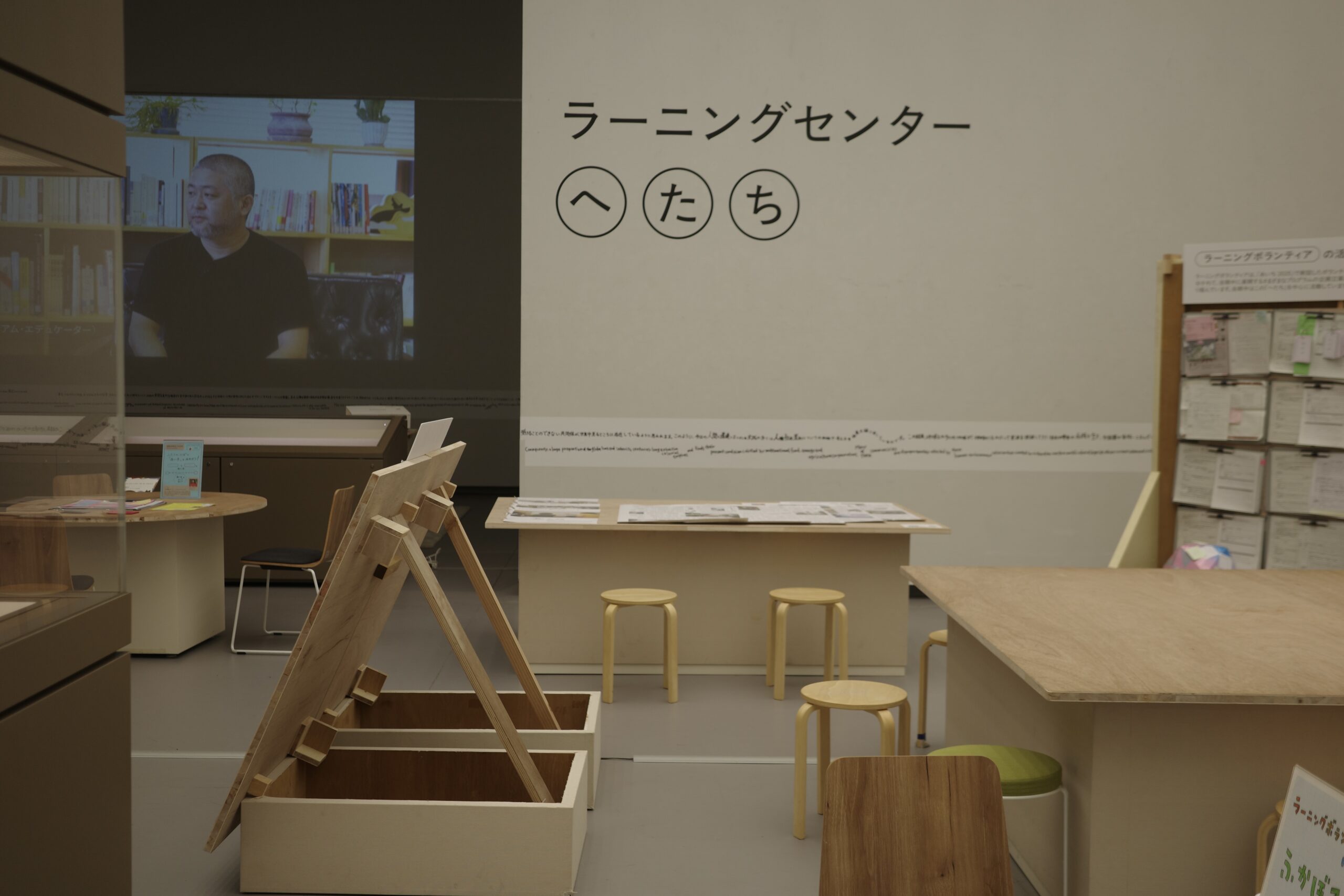 A corner of Learning Center HETACHI, 8th floor, Aichi Arts Center. Photo by LIN Yu-Hsuan.
HUANG Yu-Jie, who recently transitioned from working as an independent curator to serving as an in-house curator at the New Taipei City Art Museum, reflected on how museums might “re-explore their publicness.” She questioned how museums with relatively stable systems and resources can continue to sustain and reaffirm their public roles, and whether publicness might be articulated beyond existing institutional frameworks. In her presentation, she cited accessibility practices for people with disabilities, including tactile tours at the Mori Art Museum, sign-language tours at the Museum of Contemporary Art Tokyo, and systematically designed tactile paving across institutions. She further discussed Hiwa KAZUHIKO’s intervention in Choreographies of the Everyday at the Museum of Contemporary Art Tokyo, where the artist—drawing on his own experience as a wheelchair user—directly examined whether museum spaces truly accommodate people with disabilities. She further expanded the discussion on the publicness of museums by examining artist Shitamichi MOTOYUKI’s NACT Youth Project (Shinbi-juku), a three-year initiative developed in collaboration with the National Art Center, Tokyo. The project articulates an alternative imagination of the public that emerges through artist–museum collaboration—one that shifts from modes of “viewing” toward practices of “accompaniment.” By introducing the juku, a form of supplementary education traditionally situated within the private education system, into the museum context, the project opens up the possibility of a sustained, accompaniment-based practice within a public space.
Beyond discussions of accessibility, exchanges with curators also highlighted the careful handling required when exhibitions address sensitive topics. At the National Museum of Art, Osaka, for example, the exhibition For a Placard included Yuki IIYAMA’s video work In-Mates, which required viewers to watch the entire video without leaving midway. When our group attempted to depart due to scheduling constraints, staff intervened, resulting in an unusual viewing experience. Curators later explained that the work addresses issues such as Zainichi Koreans and mental illness and had previously been banned from screening. As its first presentation in a national museum, partial viewing could provoke complaints from right-wing groups, necessitating this rule. In the same exhibition, Shingo KANAGAWA presented photographic works depicting his own diverse family formation; when previously shown at the Tokyo Photographic Art Museum, curators engaged in extensive discussions with the artist regarding interpretive texts and precautionary measures to address potential moral controversies arising from the public display of private life.

Across visits, it became evident that public museums in Japan adopt particularly cautious curatorial approaches toward themes such as war, mental illness, government, the imperial system, nuclear disasters, and Zainichi Koreans. In the Artizon Museum exhibition The Ishibashi Foundation Collection × YAMASHIRO Chikako × SHIGA Lieko In the midst of, both artists addressed fading collective memories of World War II, the Battle of Okinawa, and the 2011 Great East Japan Earthquake. When asked about this, curator UTSUMI Junya pointed out the clear differences in review mechanisms between private and public museums, noting the need for extreme care in proposal language. When curatorial and artistic practices engage with sensitive social issues, “review” and “restriction” often function as forms of risk management—allowing voices to be heard within acceptable bounds. Reflecting on these boundaries of “freedom” may, in turn, offer those of us in Taiwan an opportunity to reconsider what freedom in public spaces might mean.
Extending the imagination of publicness, the Yamaguchi Center for Arts and Media (YCAM) in Yamaguchi City offers an intriguing case. Using technology as a tool and adopting laboratory-based operational logic, YCAM facilitates interdisciplinary collaborations that seek to open new possibilities for art.
Both HUANG Yu-Jie and CHEN Pin-Yi referenced YCAM’s Korogaru project, a spatial experiment centered on “play + creation + learning.” The Korogaru Park series has been presented in a range of commercial venues, art festivals, and public facilities. Since 2022, Korogaru: Playful Department Store has rented space on the second floor of Izutsuya Department Store in the Yamaguchi shopping street district, opening for a little over two months each summer and winter. Drawing on the geographical positioning and patterns of foot traffic characteristic of both a shopping street and a department store, the project embeds technology, exhibitions, children’s play, and creative spaces into the fabric of the local community. Each reopening introduces adjustments, while traces of use—wear on objects, children’s drawings, even residual tape—accumulate as records of change. The space resembles a department-store children’s playroom, yet carries the atmosphere of collective creation, long-term workshops, and shared time.
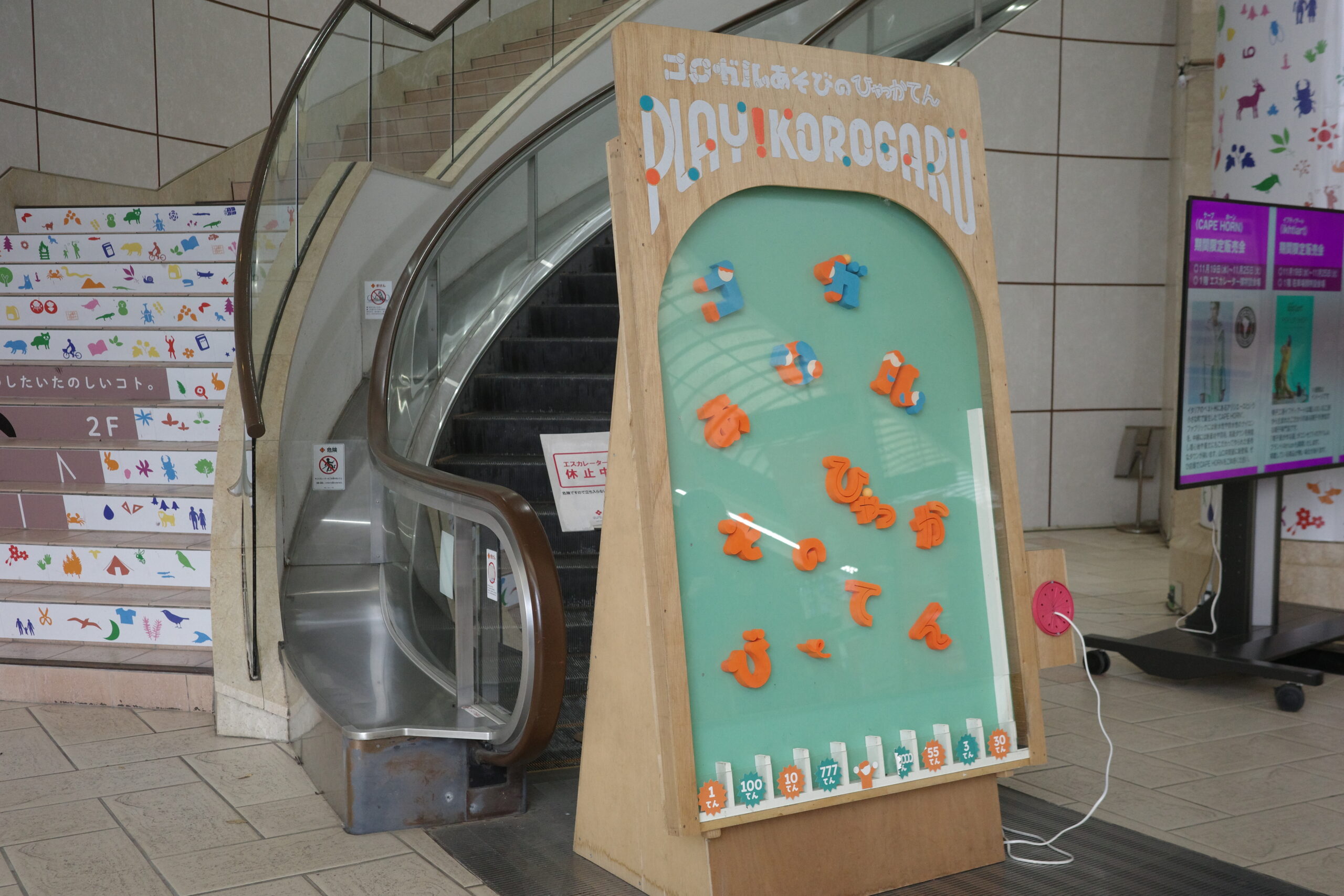 The storefront signage at the department store entrance. Photo by Lin Yu-Hsuan.
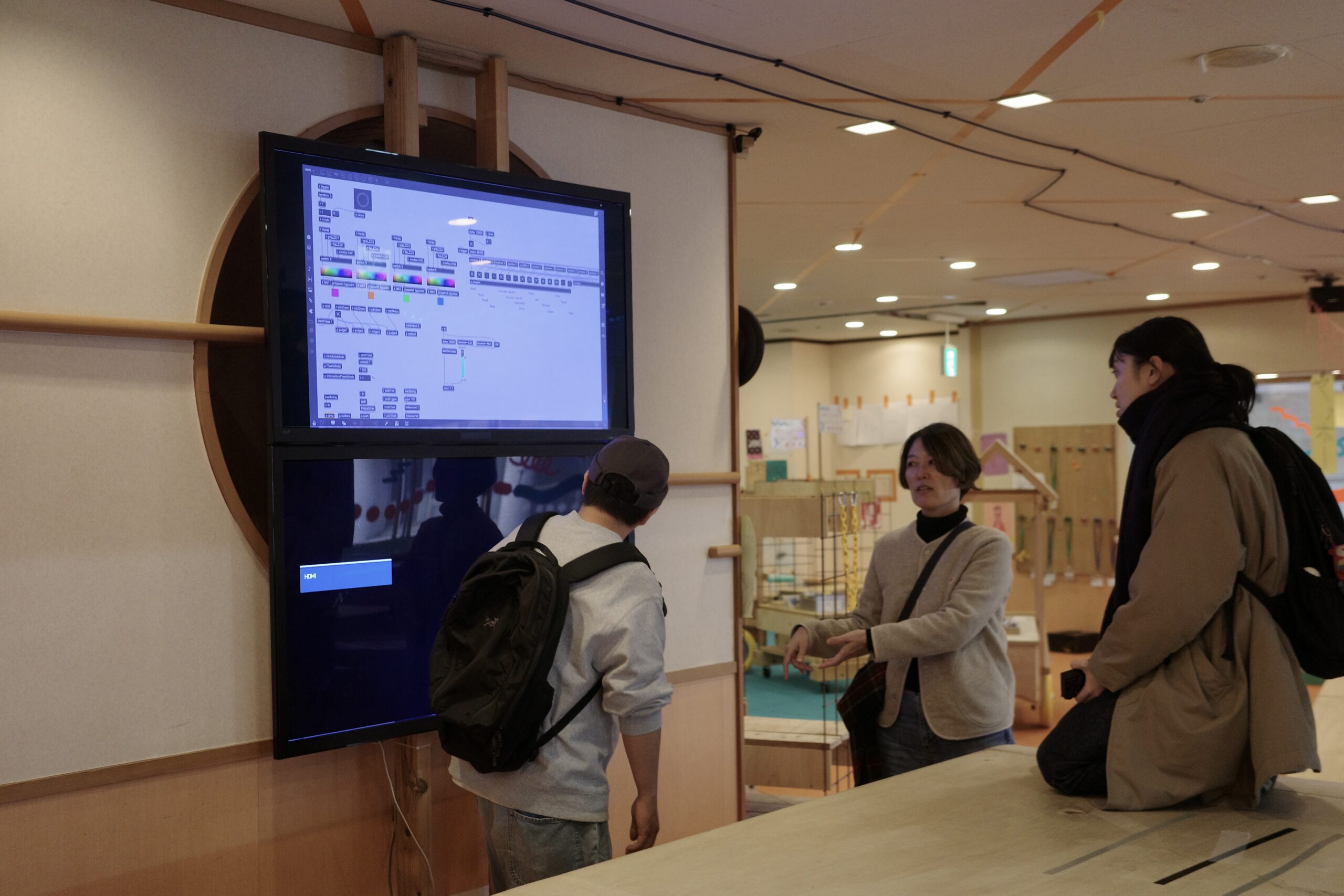 Curators explaining the logic of the underlying program. Photo by Lin Yu-Hsuan.
CHEN Pin-Yi also introduced YCAM’s ongoing project Generative Sensei, part of the Where Theater Meets School initiative launched in 2024 in collaboration with dancer/choreographer Pijin NEJI. During our visit, the work was in testing and rehearsal stages, and the curator opened backstage areas to explain production processes and technical structures. Through the integration of performing arts and technology, the project responds to future imaginaries of generation and intelligence. Set in a near-future classroom, the work features a robot “Sensei,” portrayed by a human performer, who interacts with audiences by generating dialogue in real time in response to their questions, alongside a group of small robots. By staging these encounters, the project further probes issues of coexistence and subjectivity between humans and generative AI. Addressing both children and adult audiences, the work seeks to prompt renewed reflections on human–technology relations through an immediate and interactive classroom-based experience.
Another key reference point for technological and institutional practice is CCBT (Civic Creative Base Tokyo), which is going to relocate from Shibuya to Harajuku. Since its establishment in 2022, CCBT has functioned as a public platform for collaboration among artists, designers, engineers, and researchers, focusing on “urban imagination” as a core theme. CHEN cited the art incubation project emerging from CCBT—one of Japan’s largest artist support programs—connecting artists with institutional research and production resources through open calls. To realize the vision of “Co-creating Tokyo,” CCBT also collaborated with ELECTRONICOS FANTASTICOS! on High-Speed Electromagnetic Bon-odori, a performance staged in a pedestrian space converted from an elevated roadway, featuring an orchestra built from modified discarded appliances.
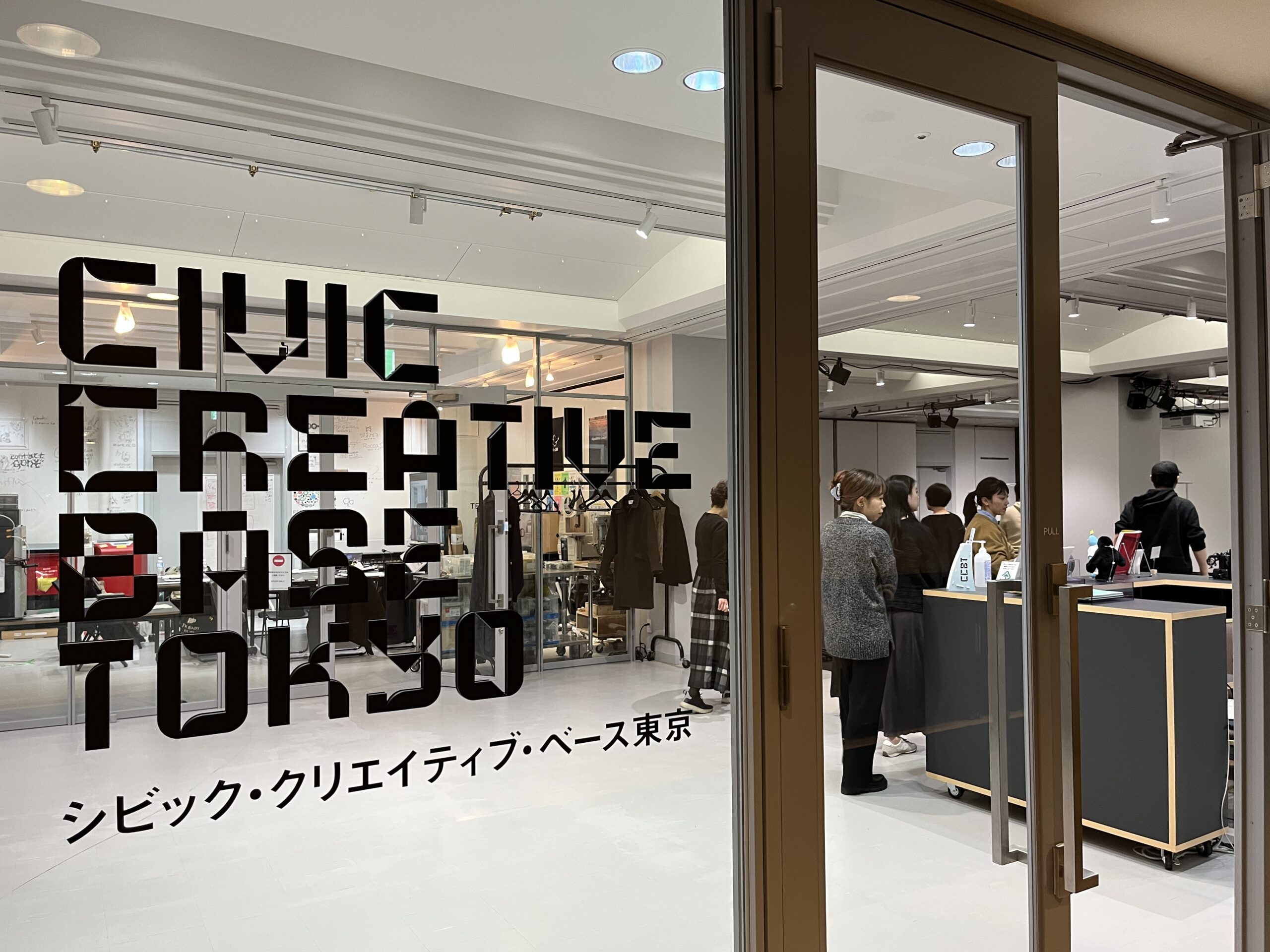 Civic Creative Base Tokyo. Photo courtesy of C-LAB.
Compared to exhibition-oriented presentations, CCBT and YCAM foreground research and experimentation before works are finalized or systematized. These spaces function as sites for testing, failure, revision, and interdisciplinary dialogue. Technology operates as both a working tool and a medium of collaboration, enabling publicness to emerge not only at the moment of exhibition, but earlier in the production process. Reflecting on this, I am reminded of C-LAB’s CREATORS support program, which provides not only residencies and funding, but also layered support systems and phased presentation opportunities—allowing dialogue and experimentation to unfold before works fully take shape.
At the conclusion of the post-trip sharing session in Taiwan, each participant summarized their experience in a single sentence. Together, these reflections pointed to a shared realization: Japan’s museum system and curatorial practices are at a moment of self-reassessment, seeking to reposition themselves amid shifts in the global art landscape.
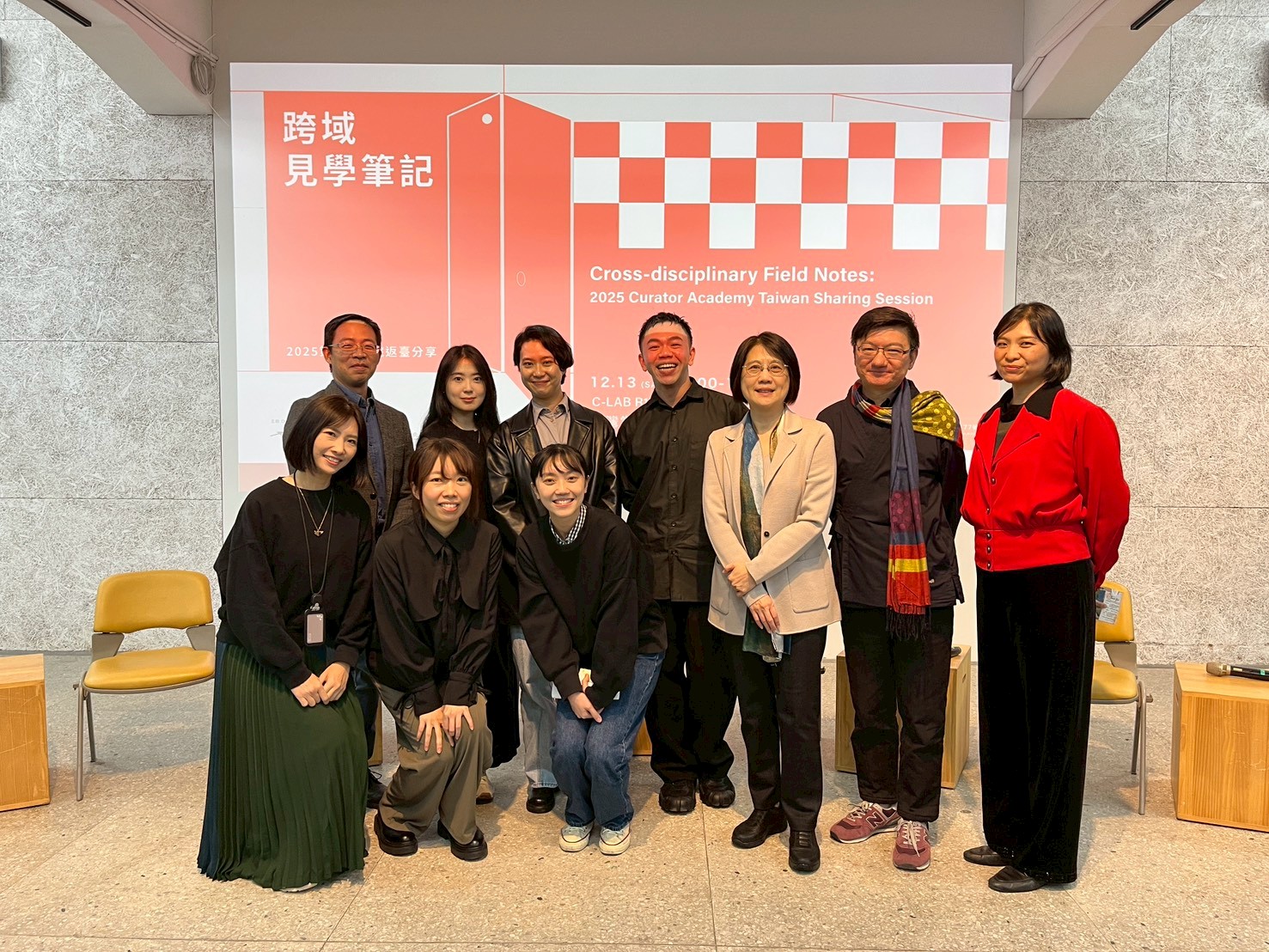 The Cross-disciplinary Field Notes:2025 Curator Academy Taiwan Sharing Session was held at C-LAB on December 13, 2025, where the five participants presented reflections on the exchange program.
Nancy Nien-Cheng WU and HUANG Yu-Jie sensed an awareness of institutional anxiety within Japan’s otherwise stable systems, alongside efforts to reconnect outwardly through discourse, exhibition frameworks, and collection strategies. LAI Chih-Ting, in turn, reflected on whether Taiwan—amid differing conditions and rapid change—could still sustain museums as sites for independent discourse production. CHEN Pin-Yi noted a still persistent distance between technological art and contemporary art contexts in Japan. From my own position outside institutional structures, I became more acutely aware of the difference between point-based international exchanges and an understanding of institutional strategy and mechanisms—two perspectives that diverge significantly.

